

A data center keeps servers stable because power and heat still have headroom, not because the aisle looks impressive on a tour. Dual utility feeds, N+1 cooling and a generator show that the room was designed. They do not show that your cabinet sits on a branch that still has capacity.
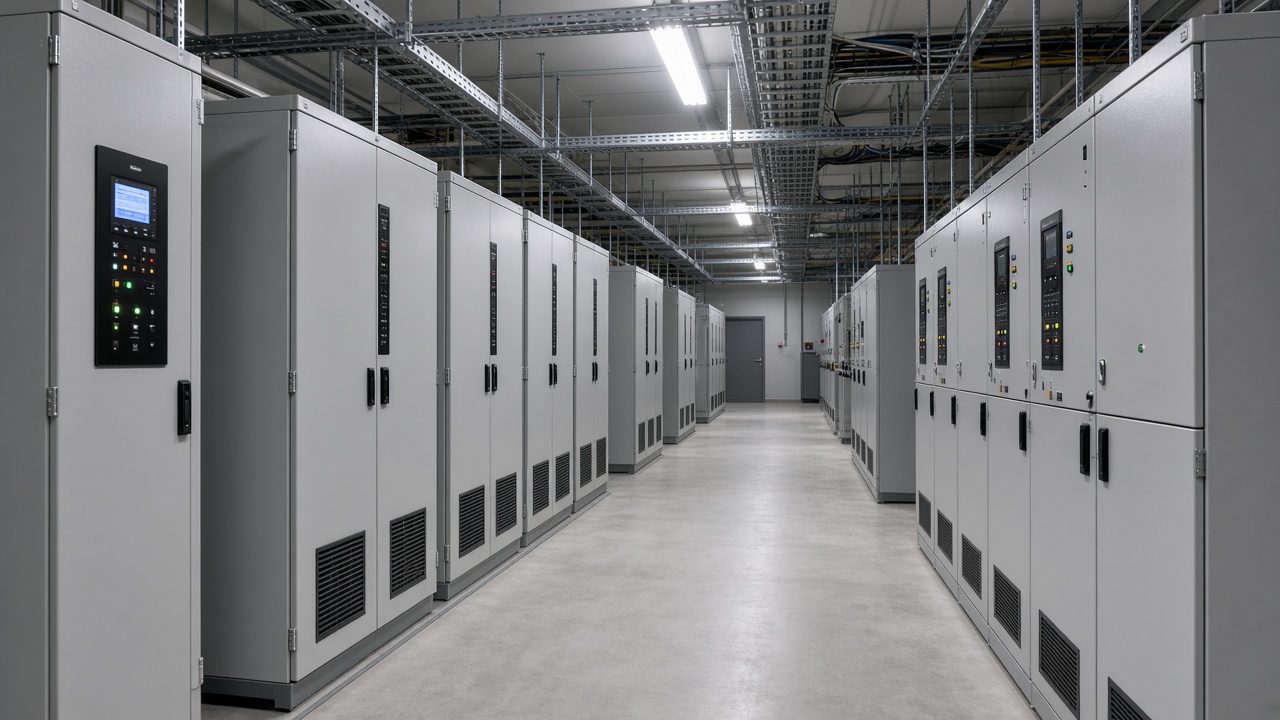
Look at power in three layers. Outside is the utility. Two feeds from different substations matter more than two cables that meet at the same transformer. In the middle are the UPS and the generator. After a utility cut, the UPS has to carry the load until the generator is stable, not merely long enough for a clean shutdown. A generator that is only started with no load still has an unknown carrying capacity. Inside is the cabinet. A dual-cord server whose both cords land on the same upstream PDU is redundant only inside the chassis. One branch can still take the whole row.
Ask for watts, not a nameplate slogan
A cabinet looks empty when every server is estimated at a few hundred watts. High-clock CPUs and accelerator cards hit the power limit before they hit a performance limit. Ask how many watts this cabinet can still accept. A large site total does not mean your row has power left. Leave room for the next purchasing cycle, not only for the server you are installing today.
Cooling depends on how air actually moves. A blocked floor tile, an open cold aisle or a neighboring cabinet already dumping heat can shift inlet temperature by several degrees along the same row. A thermometer at the aisle mouth is not the air in front of the disks. A slightly high temperature rarely crashes a machine at once. Fans stay fast for months, and power supplies and disks fail later as a group. Liquid cooling fits cabinets whose density is already high. For most dedicated servers, confirm inlet direction, cabinet power and whether a hot-spot alert reaches the people on duty.
Walk a server that resembles production and watch inlet temperature, fan speed and PDU current for an hour. If current is already near seventy percent of that branch, do not add another machine just because the cabinet still has a slot. If a power transfer can only be rehearsed by stopping the service, ask for the last loaded-transfer record and check that the transfer finished inside the UPS runtime.
Specific answers beat a generic “high-grade facility”: usable watts per cabinet, whether the two feeds diverge upstream, how often the generator is tested under load, and who handles a hot-spot alert. Those answers decide whether the server stays up through the next business cycle.